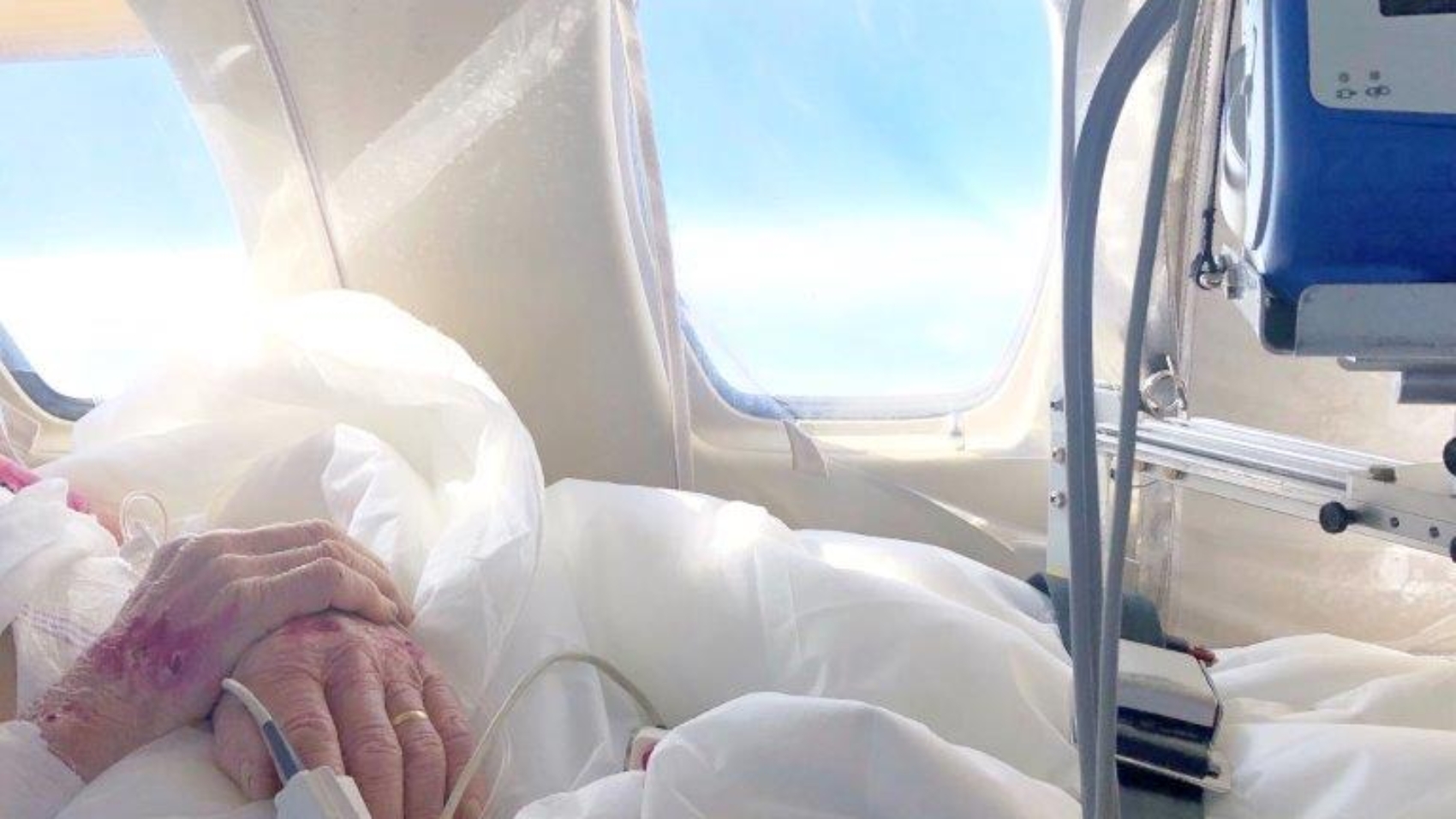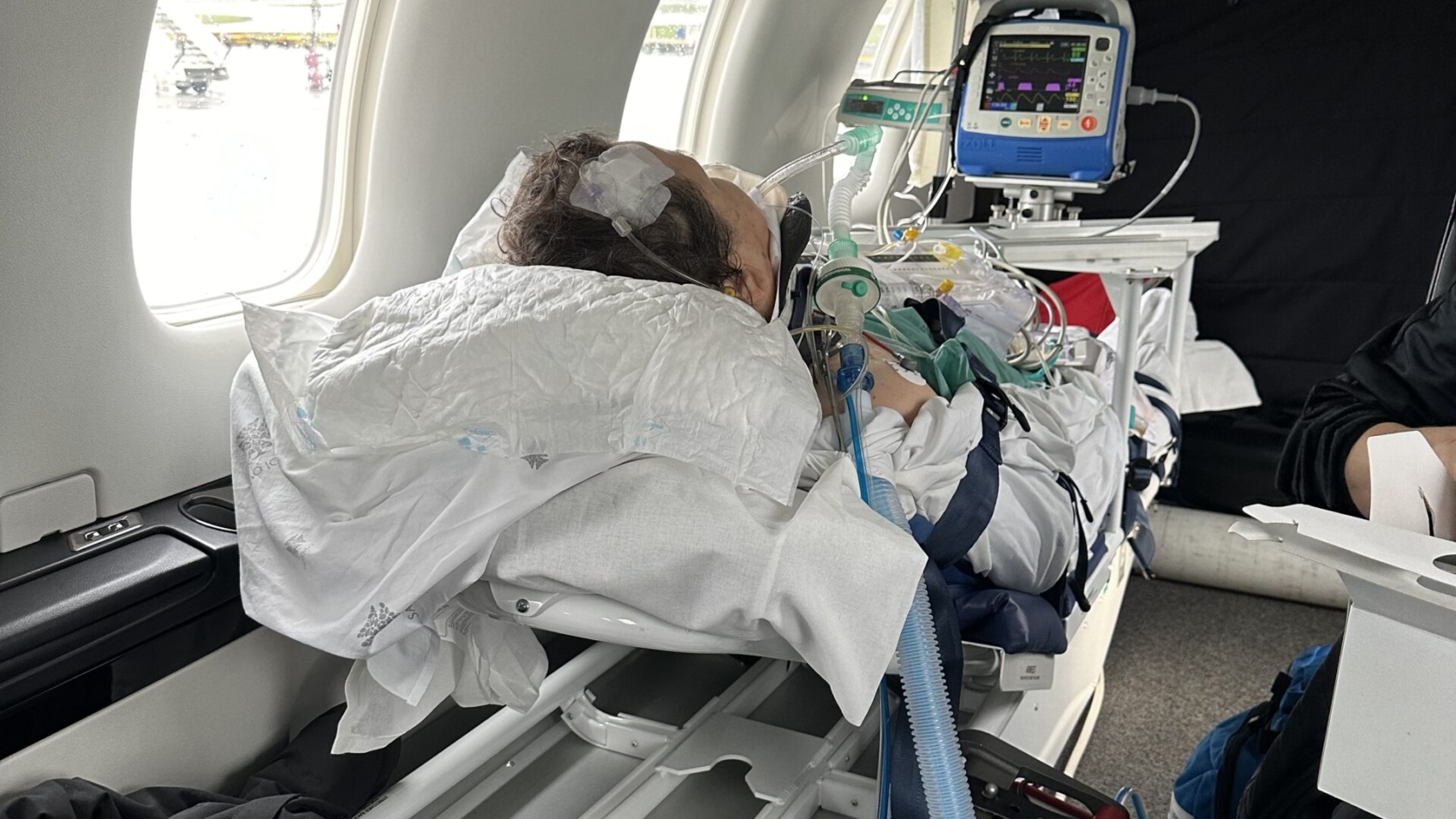
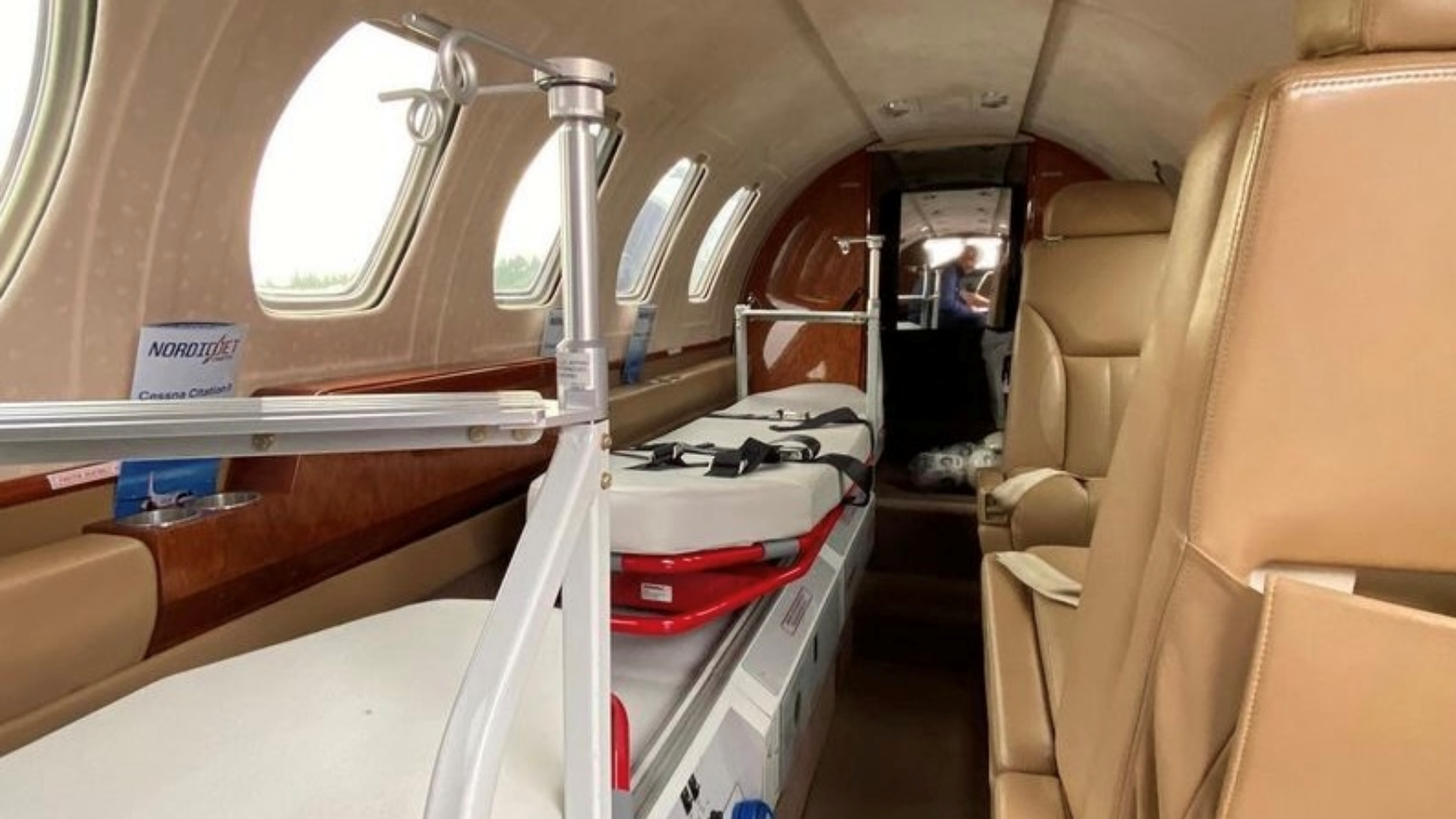
Price for Air Ambulance flight

What Does an Air Ambulance Really Cost – And Why You Should Always Ask for a Price, Even Without Travel Insurance

According to a recent survey commissioned by Finance Finland (Finanssiala ry), nearly 48% of Finns mistakenly believe that the government will arrange and cover the cost of medical repatriation in the event of a serious illness or accident abroad. Among those under 30, the figure rises to 62%.

In reality, the government does not fund air ambulance services. Without valid travel insurance, medical repatriation can become extremely expensive—especially when a private air ambulance with an onboard physician and specially equipped aircraft is required.


The Cost of an Air Ambulance Depends on Multiple Factors

EMA Finland has been conducting air ambulance missions for over 35 years, covering destinations across Europe, Asia, Africa, North and South America, and even Antarctica. Each flight is tailored to the patient’s specific medical needs, and the final cost is influenced by factors such as:

  • Flight distance and route
  • Aircraft type (e.g. private air ambulance vs. commercial flight with medical escort)
  • Medical personnel required and their expertise
  • Patient’s condition and the medical equipment needed
  • Medical procedures that may be required during the flight
  • Local infrastructure and logistical challenges at the destination

As a result, the cost can range from a few thousand euros to over €100,000, depending on the circumstances.


No Insurance? Still Ask!

Many assume that an air ambulance is not an option without travel insurance. That’s not necessarily true.

We always recommend getting in touch if you or a loved one needs to be repatriated or transported for medical care. Often, we are able to propose alternative solutions to suit different budgets—for example, a commercial flight with a medical escort can be significantly more affordable than a full private air ambulance journey.

In addition, we can advise on possible funding options or practical arrangements that may be available in your situation.


Travel Insurance – A Small Price for Major Protection

The majority of medical repatriations are arranged through insurance providers. However, it’s not enough just to have a policy—you should also check its coverage before you travel. This is especially important if you’re traveling outside the EU or engaging in higher-risk activities such as diving, skiing, or mountaineering.

Most travel insurance policies include access to a 24/7 emergency assistance service, which is often crucial in serious situations. This service coordinates with local hospitals, consulates, transportation providers, and medical personnel on your behalf.


EMA Finland – Ready When the Unexpected Happens

EMA Finland is a Finnish air ambulance company specializing in global medical transport. Whether you are covered by insurance or not, you can always reach out to us with any questions about medical repatriation.

📞 Emergency services available 24/7
🌍 Global operations
🚑 Customized solutions based on your needs


Travel Tip: Before Your Next Trip, Make Sure to Check:

  • Is your travel insurance valid?
  • What does it cover – especially in terms of medical transport?
  • Does it include coverage for high-risk activities?

With a bit of preparation, you can avoid major surprises—and if something does go wrong, EMA Finland is ready to help.

office

Price for Air Ambulance flight

What Does an Air Ambulance Really Cost – And Why You Should Always Ask for a Price, Even Without Travel Insurance

According to a recent survey commissioned by Finance Finland (Finanssiala ry), nearly 48% of Finns mistakenly believe that the government will arrange and cover the cost of medical repatriation in the event of a serious illness or accident abroad. Among those under 30, the figure rises to 62%.

In reality, the government does not fund air ambulance services. Without valid travel insurance, medical repatriation can become extremely expensive—especially when a private air ambulance with an onboard physician and specially equipped aircraft is required.


The Cost of an Air Ambulance Depends on Multiple Factors

EMA Finland has been conducting air ambulance missions for over 35 years, covering destinations across Europe, Asia, Africa, North and South America, and even Antarctica. Each flight is tailored to the patient’s specific medical needs, and the final cost is influenced by factors such as:

  • Flight distance and route
  • Aircraft type (e.g. private air ambulance vs. commercial flight with medical escort)
  • Medical personnel required and their expertise
  • Patient’s condition and the medical equipment needed
  • Medical procedures that may be required during the flight
  • Local infrastructure and logistical challenges at the destination

As a result, the cost can range from a few thousand euros to over €100,000, depending on the circumstances.


No Insurance? Still Ask!

Many assume that an air ambulance is not an option without travel insurance. That’s not necessarily true.

We always recommend getting in touch if you or a loved one needs to be repatriated or transported for medical care. Often, we are able to propose alternative solutions to suit different budgets—for example, a commercial flight with a medical escort can be significantly more affordable than a full private air ambulance journey.

In addition, we can advise on possible funding options or practical arrangements that may be available in your situation.


Travel Insurance – A Small Price for Major Protection

The majority of medical repatriations are arranged through insurance providers. However, it’s not enough just to have a policy—you should also check its coverage before you travel. This is especially important if you’re traveling outside the EU or engaging in higher-risk activities such as diving, skiing, or mountaineering.

Most travel insurance policies include access to a 24/7 emergency assistance service, which is often crucial in serious situations. This service coordinates with local hospitals, consulates, transportation providers, and medical personnel on your behalf.


EMA Finland – Ready When the Unexpected Happens

EMA Finland is a Finnish air ambulance company specializing in global medical transport. Whether you are covered by insurance or not, you can always reach out to us with any questions about medical repatriation.

📞 Emergency services available 24/7
🌍 Global operations
🚑 Customized solutions based on your needs


Travel Tip: Before Your Next Trip, Make Sure to Check:

  • Is your travel insurance valid?
  • What does it cover – especially in terms of medical transport?
  • Does it include coverage for high-risk activities?

With a bit of preparation, you can avoid major surprises—and if something does go wrong, EMA Finland is ready to help.
EMA Finland Achieves EURAMI Re-Certification

Finland is proud to announce the successful completion of its EURAMI re-accreditation, reaffirming the company’s dedication to delivering safe, high-quality air medical transport through effective clinical practices and strong aviation partnerships.

Upholding International Standards in Air Medical Transport

The European Aero-Medical Institute (EURAMI) granted re-certification following a thorough evaluation of EMA Finland’s operational and clinical procedures. The certification confirms compliance with internationally recognized best practices in air ambulance services.

EMA Finland is now certified in the following service categories:

• Regional Fixed Wing Air Ambulance

• Long Range Fixed Wing Air Ambulance

In addition, medical endorsements for:

• Critical Care Transports

• Paediatric Critical Care Transports

These endorsements reflect EMA Finland’s capacity to safely manage high-acuity medical transports, including complex cases involving critically ill adults and paediatric patients.

Commitment Through Collaboration

The re-certification is the result of close collaboration between EMA Finland’s clinical team and its partnering aviation providers — Jetflite, Industriflyg, and Scanwings. Together, they deliver integrated, patient-focused air medical solutions across the globe.

About EMA Finland

Based in Helsinki, EMA Finland Oy provides air medical transport in cooperation with trusted aviation partners. The company specializes in both adult and paediatric critical care missions, offering 24/7 response capabilities across Europe and worldwide.

About EURAMI

The European Aero-Medical Institute (EURAMI) sets international accreditation standards for air medical providers, ensuring quality, safety, and continuity of care in air ambulance services. Learn more about EURAMI

1-1496

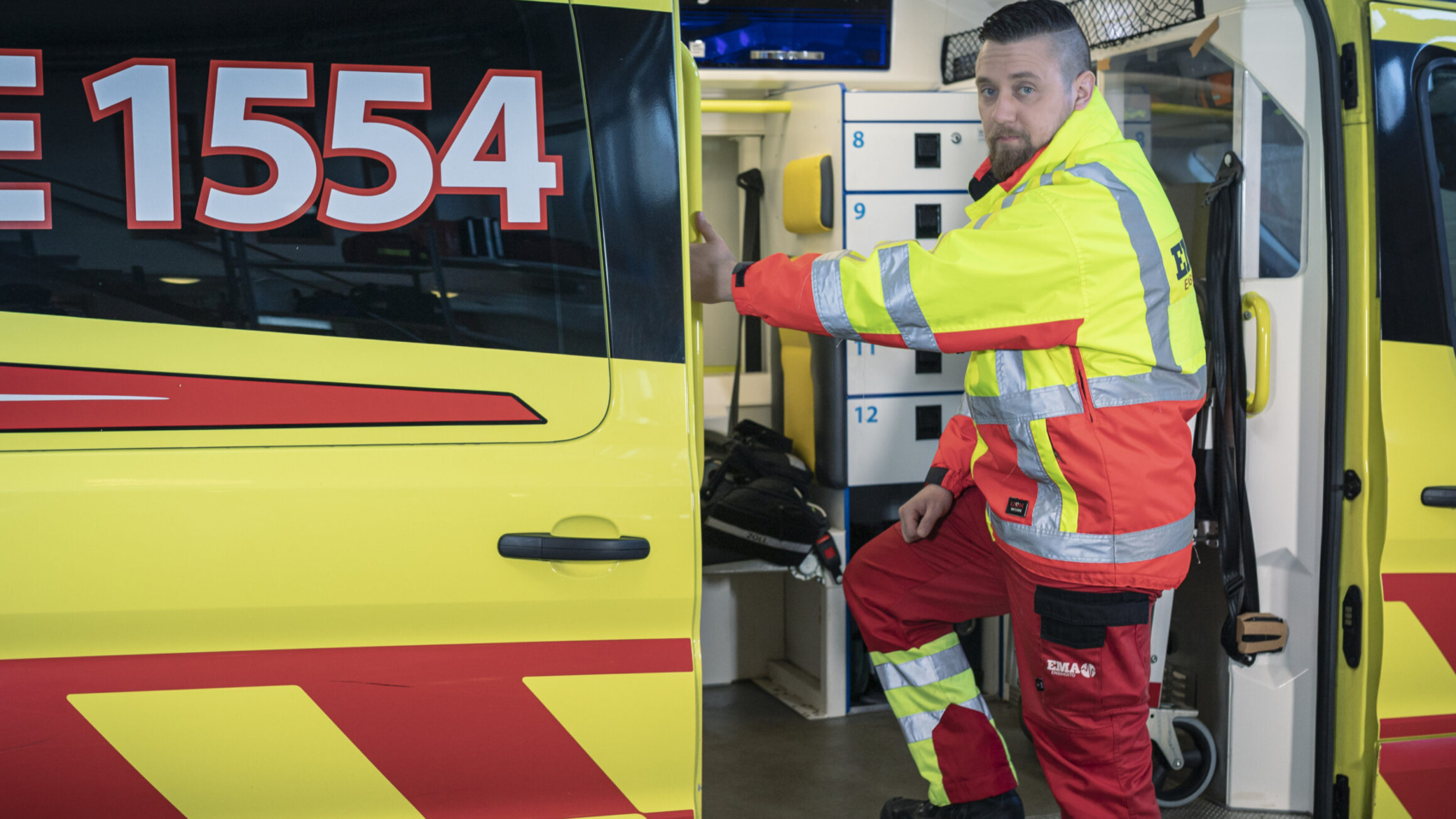
As a paramedic at EMA Finland

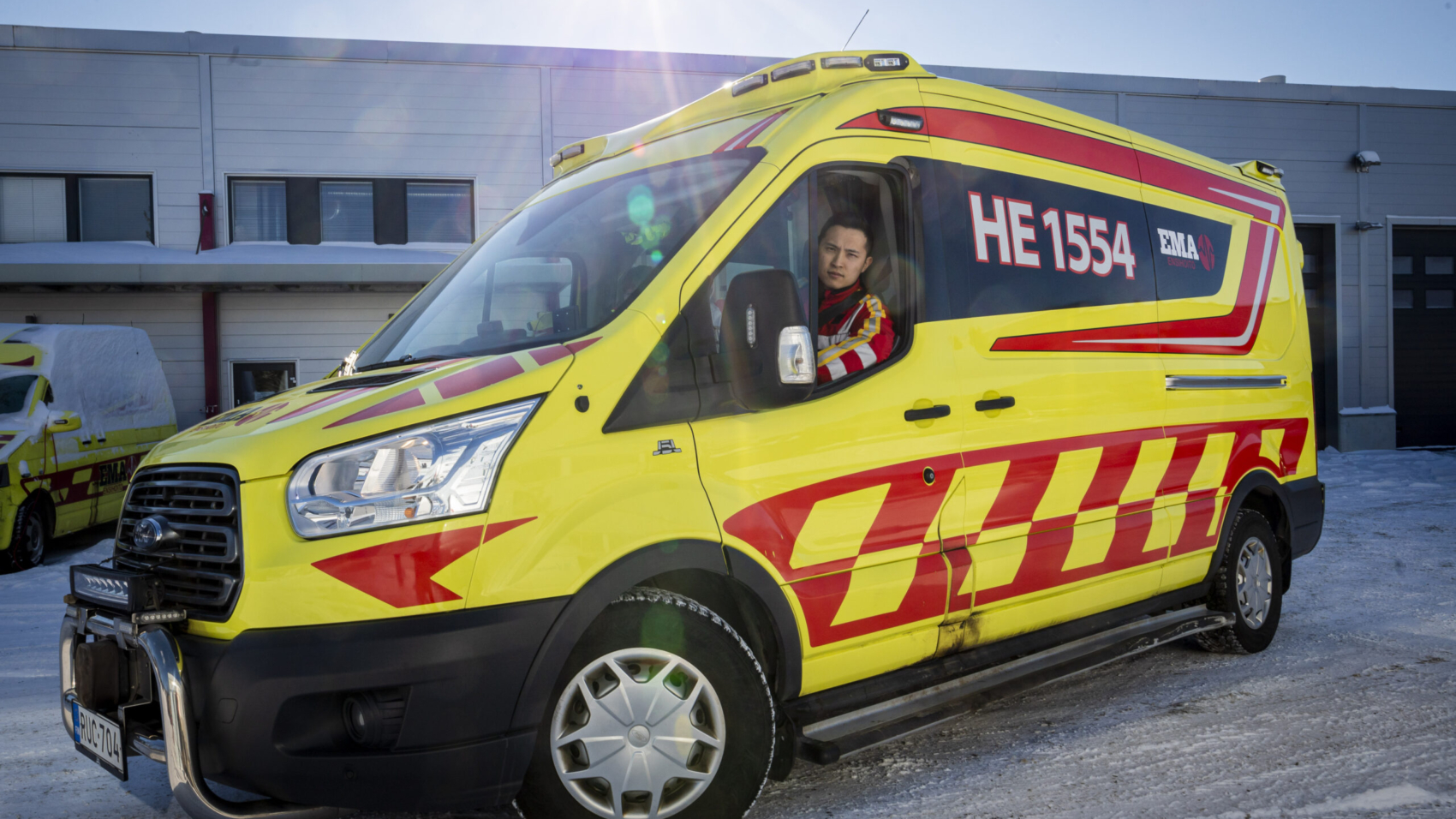
Paramedic Minh Tieu works at EMA Finland in the capital region. Tieu, who has been at EMA for five years, considers the best aspects of his job to be nice colleagues and versatile tasks.

First aid was not Tieu’s original choice. After high school, he studied at a technical college until he realized that the field was not the right one.

“I was dealing with ambulances when at one time my loved one needed one several times. Once I talked to one of the paramedics and I found out that studying on a matriculation basis only takes two years, says Tieu.”

Tieu decided to change his field. He graduated in 2015 as a primary care nurse and has since worked at EMA for almost five years.

Basic-level paramedics at EMA mostly perform non-urgent medical transport. This includes, for example, transfers between hospitals and transport from service homes and nursing homes to hospital emergency rooms and back.

Shift work and changing landscapes

The paramedics at EMA work a three-shift job. The longest shift lasts 15 hours, the shortest eight.

“The length of the shift depends on which car you are in. Sometimes it’s nice to work long days, that way you have more free time. After longer shifts, eight-hour days feel short, says Tieu.”

Employees on shift get more tasks as the previous ones are taken care of. Sometimes you have time until you have to be at the next place, and then the paramedics have time to take a break. You can use it for a coffee brake for example.

In addition to hospital transport, EMA also has the possibility to work in emergency units, which receive their tasks directly from the emergency center.

“I have previously worked in ready-to-use vehicles in Espoo for almost two years. The tasks in the basic car are mostly D-class tasks, but there may also be first response tasks if we happen to be the closest unit.”

The fact that the work environment of a paramedic is different every day also brings variability to the job.

“This is a mobile job, which I really like. The longest we have taken a patient is as far as Rovaniemi, says Tieu.”

Trainings maintain professionalism

The professionalism of EMA’s paramedics is maintained with training provided by the employer. All permanent employees are trained in either the ILS or ALS course, which are programs approved by the European Recovery Council. Tieu has completed the ILS course as a basic paramedic.

“We also have CPR training at least once a year, and sometimes the first aid manager goes around the stations and gives short trainings on a certain topic.”

In Tieu’s opinion, the best aspects of working at EMA are the versatile work opportunities, in addition to the nice colleagues. In addition to working under the emergency centers, a basic-level paramedic can work at EMA in medical transport tasks as well as in care level ambulances that handle other, more urgent tasks. If desired, a basic-level paramedic can also expand his job description further with postgraduate studies.

“I believe that at some point I will apply to a university of applied sciences to study first aid. At the moment, I’m satisfied with this situation, so I haven’t applied to school yet, says Tieu.”

1-1398

As a paramedic at EMA Finland

Raine Grönholm works as a paramedic at EMA Finland in Pirkanmaa. Work at EMA has been varied and educational, and Raine thinks that as a paramedic you can always improve.

Grönholm’s career in the healthcare industry started at a young age, as he worked as a nursing assistant in service units for the elderly and disabled during his high school years. When choosing a field of study, the health care industry still interested me, but as a work environment, the hospital did not feel like my place. Instead, Grönholm was attracted to the diversity of first aid, and so he ended up studying first aid at the University of Applied Sciences.

“It’s interesting that during the same day you meet several patients with different ailments and therefore you get to think about and plan their treatment, says Grönholm.”

Grönholm was able to work at EMA immediately after graduation. The work at EMA has met his expectations well, because the internships during his studies gave a good idea of what a paramedic’s work is like.

At EMA, Grönholm’s work includes working in both care-level and basic-level units. He drives a lot of non-urgent patient transports, but also civic tasks under the emergency center. It depends on the day and the unit, which one he does more. According to Grönholm, both have their own advantages in terms of professional interest.

“During transports, you get ready-made epicrisis, through which you can learn what has been studied about the patient. However, I personally like civic duties the most. Then we go to the task with limited preliminary information, make a working diagnosis and an assessment of the need for treatment, and decide whether the patient needs transport.”

The work of a paramedic is defined quite a lot by external circumstances, but there are still opportunities to modify one’s own work. At EMA, some units perform more tasks than others, and the paramedics in the field have less time to perform, for example, station service.

“You can have a surprising amount of influence on your own work. When working together with a partner, we decide together how this task will go, what to do next and how long it will take. Do you want the task to go smoothly, or do you want to give the patient a little more time if you feel like they need it.”

Teamwork, tight situations and continuous learning

Paramedics encounter almost the entire spectrum of human life in their work, and sometimes the situations can be emotionally difficult. When such an incident occurs, the incident is discussed afterwards with the work partner and, if necessary, also at a debriefing event organized by the supervisor. Debriefing is needed in particularly difficult situations, such as after unsuccessful CPR. However, memorable moments can also be positive, such as when you receive praise from a patient.

“The encounter between the paramedic and the patient is often so short that there is rarely praise. But when you get it, it’s even more meaningful, Grönholm says.”

Paramedics receive feedback not only from patients, but also from each other. The compliments and thanks received from the work partner during the shift help to cope.

“We have a really good working atmosphere. There hasn’t been a single work partner I haven’t had a conversation with, but of course that’s also up to you, Grönholm says.”

Although the work of a paramedic is independent, it is also teamwork, where social skills are important. Effective communication with your partner is a must for success at work, and good interaction skills are naturally also needed with patients.

“You must be able to look people in the eye and touch them. Self-initiative is also important, because you are alone in the field with a partner. Even though there are two of us, someone has to manage the situation and be able to decide the need for treatment based on the assessment of what the patient needs. In addition, you have to know how to listen. There can be a huge flood of words from people, and you have to be able to pick out the right things from there.”

Grönholm also mentions the maintenance and development of professional skills as important qualities for a paramedic. The basics remain the same in the work of a paramedic, but new forms of treatment and drugs are constantly being developed, and it is also important for paramedics to be aware of them.

You have to be ready to receive new information and accept the fact that you are never ready. Every task could be handled better in some way, says Grönholm.

IMG_7650 (1)

EMA Finland 35 Years

This year, EMA Finland proudly celebrates its 35th anniversary, a major milestone for our company. Since 1989, we have consistently upheld our unwavering commitment to delivering exceptional emergency services and patient care. Throughout the years, our services have expanded, evolved, and set new standards in emergency medical assistance.

A comprehensive understanding of Finland’s journey can be best obtained through the following statistics:

  • Average Annual Assistance Cases: 7000
  • Annual Patient Transfers: 200 (100 commercial flights, 100 private patient transfers)

These numbers are not just statistics; they represent the thousands of lives we have had the honor to impact through our emergency services.

Assistance Services

EMA Finland has been providing a wide range of assistance services since 1980. Over the years, we have handled thousands of cases annually. This experience has earned us a reputation for reliability and expertise in handling emergency situations, of which we are immensely proud.

Patient Transfers

Every year, we estimate that we perform 200+ patient transfers to ensure that individuals receive the necessary medical attention promptly and safely. Since we began offering air ambulance transfers in 1989, we have successfully transported patients around the world. Our air ambulance service team is equipped with state-of-the-art medical equipment and staffed by highly trained medical professionals, ensuring that patients receive the highest level of care during transit.

Additionally, we manage patient transfers via commercial flights and ships/ferries. These services are designed to accommodate various medical needs, providing flexible and efficient options for patient transportation. Whether through air or sea, our priority is always the safety and well-being of our patients.

Future

For the past 35 years, EMA Finland has been dedicated to providing high-quality service. We take pride in our exceptional customer service and the expertise of our medical professionals. Our team consists of highly skilled and dedicated individuals who bring their expertise and compassion to every case they handle. This dedication has allowed us to achieve remarkable outcomes and establish a trusted name in emergency services.

As we celebrate this significant milestone, we are looking forward to the future. EMA Finland is committed to continuing its mission of providing top-tier emergency services and ensuring the safety and well-being of our patients. We are constantly exploring new ways to enhance our services, adopt the latest medical advancements, and expand our capabilities to meet the evolving needs of our clientele.

EMA Finland’s 35th anniversary is not just a celebration of our past achievements, but also a testament to our ongoing dedication to excellence in emergency services. We thank our team, partners, and the community for their unwavering support and trust. Together, we look forward to many more years of making a difference in the lives of those we serve.

For more information about our services and how we can assist you, please visit Travel Emergency Services or contact our customer service team.

Read more: Matkaviikko (Finnish)

ambulanssilennolla 5

EMA Finland: Air Ambulance Services for Critical Patients

When a serious illness occurs while you’re abroad, transferring the patient to their home country for treatment can often be the best option. Reasons for such transfers include inadequate medical resources at the destination, prolonged treatment in an unfamiliar cultural and linguistic environment, and the psychological stress these factors can cause for the patient.

EMA Finland Ltd has been managing air ambulance services in Finland for 35 years, primarily facilitating the transfer of critically ill patients. These services are also utilized within the country for patients requiring specialized medical care such as ECMO, burn treatment, pediatric cardiac care, hyperbaric oxygen therapy, and transplant surgeries.

The Challenges of Air Transport

Air Pressure and Altitude:

As altitude increases, air pressure decreases. At typical jet cruising altitudes (around 12 kilometers), the atmospheric pressure is only about one-fifth of that at sea level. Modern aircraft are pressurized to simulate an altitude of approximately 2,500 meters, where air pressure is about 25% lower than on the ground. This can cause healthy individuals’ oxygen saturation to drop to around 90%, increasing breathing effort and oxygen consumption by the heart. For patients, especially those with certain medical conditions, this reduced pressure can lead to complications. If a patient’s condition requires cabin pressure equivalent to sea level, the aircraft must fly at a lower altitude, significantly increasing travel time and fuel consumption. This is known as a “sea-level flight.”

Acceleration and Deceleration:

During takeoff, the blood in a lying patient tends to shift depending on the body’s position, requiring careful management to prevent blood pressure fluctuations. For neurosurgical patients, positioning the head in the direction of travel helps prevent increases in brain pressure.

Turbulence:

Air turbulence caused by weather phenomena, jet streams, wake vortices, and clear air turbulence can cause sudden and severe vertical accelerations. Securing the patient and medical supplies is crucial to prevent movement during turbulence.

Noise, Vibration, and Movement:

Aircraft noise and vibrations can cause discomfort, fatigue, nausea, shallow breathing, and muscle tension. These factors complicate patient monitoring and treatment, necessitating efficient communication and careful planning.

Spatial Constraints:

The limited space in air ambulances requires careful positioning of the patient to ensure easy access to vascular connections, catheters, and drains. Basic treatment must be adapted to the confined environment, and infusions often need to be administered via pumps due to limited cabin height.

Implementing Patient Transfers

Patient transfer operations begin with thorough preparation, including obtaining the patient’s background information, current status, and ensuring all logistics are in place. This involves securing overflight and landing permits, visas, and customs formalities. Coordination with the receiving hospital is essential to prepare the patient for transfer.

The aircraft is modified for medical use by removing seats to accommodate 1-2 beds equipped with pressurized oxygen. Medical equipment and medications are provided by EMA Finland’s medical crew, which typically includes an anesthesiologist, an intensive care nurse, and other specialists as needed.

During the transfer, patient monitoring and treatment are conducted as in a hospital, with portable blood gas analyzers and other necessary equipment. After landing, the patient is transferred via ground ambulance to the receiving hospital.

Financial Considerations

Air ambulance flights are a significant financial investment. European flights can cost tens of thousands of euros, while intercontinental flights can exceed one hundred thousand euros. Most transfers are funded by insurance companies or healthcare districts, with private payers accounting for only about 5% of transfers. Despite the costs, the value of saving a human life justifies these substantial investments.

Alternative Transport Options

When a patient’s condition allows, they can be accompanied on a commercial flight. This requires the patient to sit upright during takeoff and landing and not disturb other passengers. Additional seats or business class seating may be used, and medical escorts are often required if the patient needs medical monitoring, medication or e.g. supplemental oxygen, which is usually supplied by the airline for an additional fee.

EMA Finland’s air ambulance services play a critical role in ensuring that patients receive the best possible care. Our commitment to excellence, thorough preparation, and specialized medical teams ensure that every patient transfer is conducted safely and efficiently. As we continue to provide these essential services, we remain dedicated to meeting the evolving needs of our patients with professionalism and compassion.

Source (In Finnish): Laine A., Haapsaari P.: Sairaanhoitoa Ilmassa. Finnanest 2018, 51(4) (https://say.fi/files/laine_sairaanhoitoa.pdf)